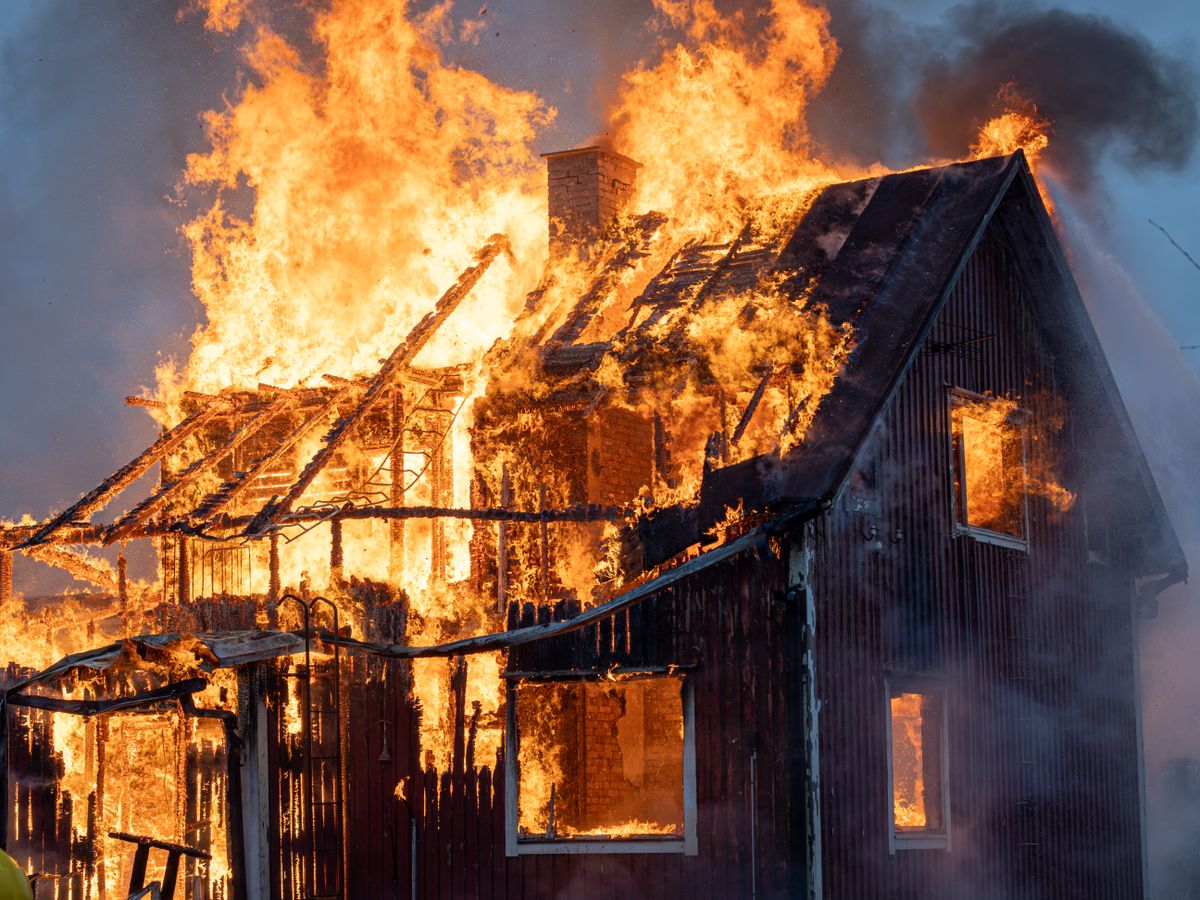
Fire is among the most broadly covered losses on a property policy, and among the most under-documented. The flames are only part of it. Smoke migrates through the structure and HVAC into rooms the fire never reached, soot damages contents and finishes, and the water used to extinguish the fire creates a second, separate loss.
A fire claim is really several claims stacked together: structure, contents, smoke and odor remediation, code-required upgrades on the rebuild, and the loss of use or business interruption while the property is out of service. Each has to be documented, or it gets left out.
What decides a fire & smoke claim in Florida.
Smoke and soot travel far past the burn
Smoke and soot reach rooms the fire never touched, embedding in walls, ceilings, ductwork, and contents. Proper remediation and, often, replacement of affected materials is part of the loss. Carriers tend to scope only the visibly burned area.
Contents and code upgrades
Damaged personal property and business contents require a full, itemized inventory and valuation. And rebuilding to current code, ordinance-or-law coverage, adds cost the original structure did not carry. Both are routinely under-scoped.
Loss of use and business interruption
While the property is uninhabitable or closed, additional living expense (residential) or business interruption and loss of rents (commercial) are separate covered losses with their own documentation.
The Florida rules that decide a fire claim
Fire has no weather-verification rule to lean on, which makes the deadlines less forgiving than a storm claim. These sections were read from the Florida Legislature the day this page was last updated.
The one-year clock starts the day of the fire
Section 627.70132(2) bars a claim or reopened claim unless notice reached the insurer within one year of the date of loss, and bars a supplemental claim after 18 months. It reaches loss or damage caused by any peril. Weather losses get a NOAA verification date under 627.70132(3); a fire does not. The date of loss is the fire, and the clock starts immediately.
Loss assessment against unit owners runs on its own timetable
When a fire damages a condominium and the association levies an assessment, 627.70132(4) gives a unit owner notice of a loss assessment claim by the later of one year after the date of loss or 90 days after the board votes to levy the assessment, with an outer limit of three years. Boards frequently vote long after the fire, and owners who assume the ordinary one-year bar applies give up coverage they still had.
The damage done getting to the damage is part of the loss
Under 626.9744(1), on a repair-or-replacement-cost homeowner policy, physical damage incurred in making a covered repair is included in the loss to the extent of policy limits, and the insured cannot be made to pay for code-required betterment beyond the deductible unless the policy specifically excludes it. On a fire that means the demolition, the openings cut to reach smoke-contaminated cavities, and the finishes destroyed to get there.
Smoke reaches units the flames never touched
In a multifamily building, smoke and soot travel through shared walls, chases, and common HVAC into units far from the origin, and the water used to fight the fire runs downward through floors below. Under a master policy those are common-element and building losses that belong in the association's claim, and they are the first thing a carrier scoping the unit of origin leaves out.
Statute text read from the Florida Legislature on 2026-08-24. General information only, not legal advice or a coverage determination. Coverage depends on your specific policy, the facts of your loss, and current Florida law.
What the carrier will try on a fire & smoke claim.
- —Scoping only the visibly burned area and ignoring smoke and soot migration.
- —Under-valuing contents or pushing a quick, low personal-property number.
- —Omitting code-upgrade costs required to rebuild legally.
- —Minimizing additional living expense, loss of use, or business interruption.
We Build Your Claim The Way Ford Built The Assembly Line.
Henry Ford didn’t try to be the expert at everything. He surrounded himself with specialists, each mastering one part of the work, and assembled the result into something no individual could build alone. We document claims the same way. For a serious loss, one adjuster’s opinion is not enough, so we bring in the right specialists, pull a full report from each, and assemble them into a claim the carrier cannot dismiss.
Building Consultants
Read the structure and the code the way an insurer’s engineer does, so nothing covered gets left out of scope.
General Contractors
Real-world repair pricing and sequencing that holds up when the carrier questions the cost to rebuild.
Structural Engineers
Independent reports on causation and structural damage that carry weight the carrier can’t wave off.
Professional Estimators
Line-item Xactimate estimates built to the same software and standards the carrier’s own adjuster uses.
Contents Specialists
Full inventory and valuation of damaged personal property and business contents, item by item.
Water & Mold Testing
Moisture mapping, thermal imaging, and lab testing that prove the source, the spread, and the cause of loss.
We don’t send an adjuster. We send a team.
These specialists are independent third-party professionals brought in for documentation and evidence purposes. CCG does not perform repair work and holds no financial interest in any repair or remediation contract.
Fire & Smoke claims: what Florida property owners ask.
Does insurance cover smoke damage if the fire was small?
Typically yes. Smoke and soot damage is covered even in rooms the fire never reached, because smoke migrates through the structure and HVAC. Proper remediation, and replacement where materials cannot be cleaned, is part of the claim.
What about the water damage from putting the fire out?
The water used to extinguish a fire generally creates its own covered damage, on top of the fire and smoke loss. It should be documented and scoped separately, not folded into a single low number.
How are my damaged belongings valued?
Contents require a detailed, itemized inventory and valuation. Carriers often push a fast, low personal-property estimate. A full inventory, item by item, is usually worth far more than the number offered.
Where will we live or operate while the property is repaired?
A residential policy typically includes additional living expense, and a commercial policy typically includes business interruption and loss of rents, to cover the period the property is unusable. These are separate covered losses that are easy to leave money on if not documented.
General information only, not legal advice or a coverage determination. Coverage depends on your specific policy, the facts of your loss, and current Florida law.
Denied, underpaid, or already closed? Florida law may still give you time to reopen a fire & smoke claim.
Have a fire & smoke loss? Start with a free review.
James reviews every submission personally and responds within 24 hours. No obligation, and no fee unless we recover for you.
← All claim typesReport Your Claim
We respond within 24 hours.