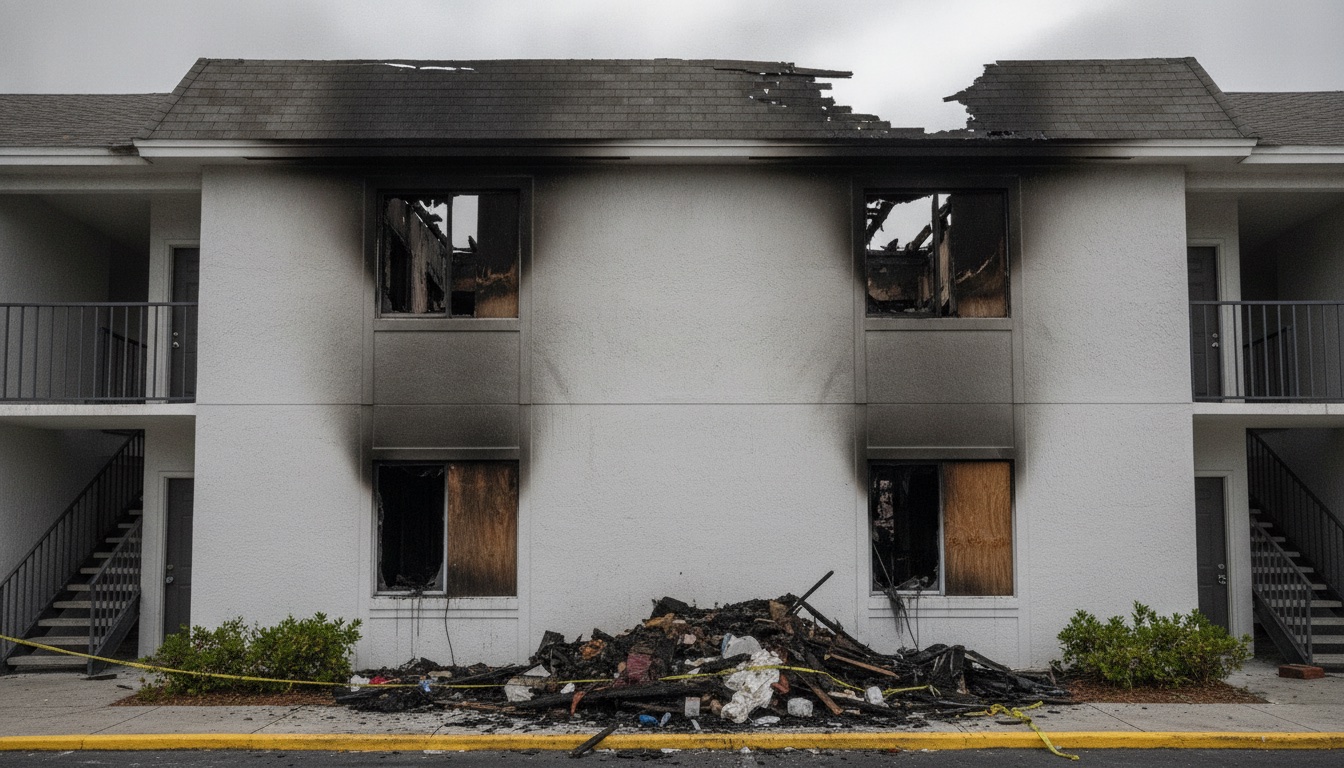
A fire that starts in a single unit rarely stays there. Smoke and soot migrate through shared walls and common HVAC into units the flames never reached, the water used to fight the fire damages floors below, and tenants are displaced while the building is repaired. For an association or apartment operator, one fire is a building-wide loss.
A commercial fire claim stacks several claims together: structure and common elements, smoke and odor remediation throughout the building, contents, code-required upgrades on the rebuild, and the loss of rents while units sit empty. Each has to be documented separately, or it gets left out of the settlement.
What decides a commercial fire & smoke claim.
Smoke travels through shared systems
In a multifamily building, smoke and soot spread through common HVAC, chases, and shared walls into units far from the fire. Proper remediation, and replacement where materials cannot be cleaned, across all affected units is part of the loss, not just the burned area.
Loss of rents while units are down
Displaced tenants mean lost rental income for the duration of the repairs. That loss of rents is a separate covered component with its own documentation, and it runs for the reasonable period of restoration, not just the days of active firefighting.
Common elements and code upgrades
Fire damage to hallways, roofs, electrical, and other common elements is the association’s claim, and rebuilding to current code adds ordinance-or-law cost. Both are routinely under-scoped by a carrier focused on the unit of origin.
What the carrier will try on a commercial fire & smoke claim.
- —Scoping the unit of origin and ignoring smoke and soot in surrounding units.
- —Folding the firefighting water damage into a single low number.
- —Minimizing loss of rents and the period the building is unusable.
- —Omitting code-upgrade costs required to rebuild common elements legally.
We Build Your Claim The Way Ford Built The Assembly Line.
Henry Ford didn’t try to be the expert at everything. He surrounded himself with specialists, each mastering one part of the work, and assembled the result into something no individual could build alone. We document claims the same way. For a serious loss, one adjuster’s opinion is not enough, so we bring in the right specialists, pull a full report from each, and assemble them into a claim the carrier cannot dismiss.
Building Consultants
Read the structure and the code the way an insurer’s engineer does, so nothing covered gets left out of scope.
General Contractors
Real-world repair pricing and sequencing that holds up when the carrier questions the cost to rebuild.
Structural Engineers
Independent reports on causation and structural damage that carry weight the carrier can’t wave off.
Professional Estimators
Line-item Xactimate estimates built to the same software and standards the carrier’s own adjuster uses.
Contents Specialists
Full inventory and valuation of damaged personal property and business contents, item by item.
Water & Mold Testing
Moisture mapping, thermal imaging, and lab testing that prove the source, the spread, and the cause of loss.
We don’t send an adjuster. We send a team.
These specialists are independent third-party professionals brought in for documentation and evidence purposes. CCG does not perform repair work and holds no financial interest in any repair or remediation contract.
Commercial fire & smoke claims: what boards and operators ask.
Fire started in one unit but smoke reached others. Is all of it covered?
Generally yes. Smoke and soot damage is covered even in units the fire never reached, because it migrates through shared HVAC and walls. Proper remediation across all affected units, and replacement where materials cannot be cleaned, is part of the claim.
Does the association or the owner handle a fire claim?
The association typically handles the building, common elements, and the structure under the master policy; owners handle their unit interiors and contents under their own policies. The overlap is where scope gets disputed, and where documentation matters most.
Can we recover lost rent while displaced tenants are out?
Usually yes, loss of rents is a typical covered component while the building is being restored, for the reasonable period of restoration. It is documented from your financials and the repair timeline.
What about the water damage from putting the fire out?
The water used to extinguish a fire generally creates its own covered damage, on floors and units below, on top of the fire and smoke loss. It should be documented and scoped separately, not absorbed into one figure.
General information only, not legal advice or a coverage determination. Coverage depends on your association’s or building’s specific policy, the facts of your loss, and current Florida law.
Have a fire & smoke loss at your property? Start with a free review.
James reviews every commercial submission personally and responds within 24 hours. No obligation, and no fee unless we recover for you.
← Commercial DivisionReport a Commercial Loss
We respond within 24 hours.