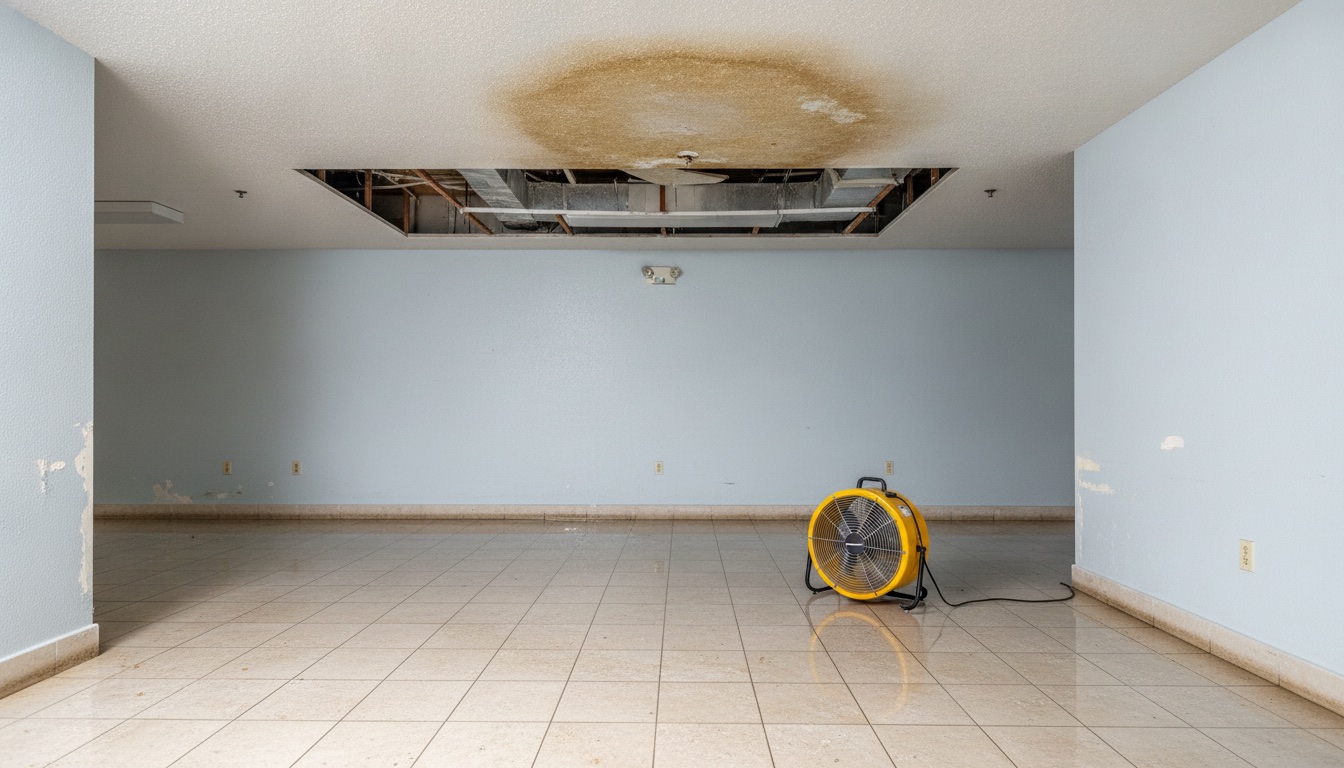
In a condominium or apartment building, water never stays in one unit. A supply-line or drain failure on an upper floor travels down through ceilings, walls, and common areas, damaging multiple units and the shared structure at once. The result is a claim that crosses the line between what the association covers and what individual owners cover, which is exactly where carriers create delay and dispute.
A commercial water claim is really a scope question: which damage is the association’s under the master policy, which is the unit owner’s, and how far did the water actually travel. Answered with documentation, moisture mapping, and the right specialists, it becomes a claim the carrier cannot split apart to underpay.
What decides a commercial plumbing & water claim.
Unit versus common element
The master policy covers the building and common elements; unit owners cover their interiors. Water that starts in one unit and damages others and the common structure sits right on that line. Establishing what the association’s policy owes, versus the owners’, is central to the claim, and to loss-assessment coverage.
Sudden and accidental versus the 14-day rule
Coverage turns on whether the discharge was sudden and accidental. Most policies exclude damage from leakage that continued over 14 days or more. In a large building where a leak can go unnoticed between floors, establishing the timeline is often the whole fight.
Water travels farther than it shows
The visible stain is the smallest part. Water wicks into wall cavities, subfloor, and adjacent units, and the cost to open up, dry, repair, and match those areas, plus any mold that follows, is part of the loss. Carriers scope what they can see and stop there.
What the carrier will try on a commercial plumbing & water claim.
- —Splitting the loss between association and owner policies to underpay both.
- —Invoking the 14-day continuous-seepage exclusion on a leak that went unnoticed.
- —Scoping visible damage and ignoring water that traveled between units and floors.
- —Capping a large water loss under a small mold sublimit.
We Build Your Claim The Way Ford Built The Assembly Line.
Henry Ford didn’t try to be the expert at everything. He surrounded himself with specialists, each mastering one part of the work, and assembled the result into something no individual could build alone. We document claims the same way. For a serious loss, one adjuster’s opinion is not enough, so we bring in the right specialists, pull a full report from each, and assemble them into a claim the carrier cannot dismiss.
Building Consultants
Read the structure and the code the way an insurer’s engineer does, so nothing covered gets left out of scope.
General Contractors
Real-world repair pricing and sequencing that holds up when the carrier questions the cost to rebuild.
Structural Engineers
Independent reports on causation and structural damage that carry weight the carrier can’t wave off.
Professional Estimators
Line-item Xactimate estimates built to the same software and standards the carrier’s own adjuster uses.
Contents Specialists
Full inventory and valuation of damaged personal property and business contents, item by item.
Water & Mold Testing
Moisture mapping, thermal imaging, and lab testing that prove the source, the spread, and the cause of loss.
We don’t send an adjuster. We send a team.
These specialists are independent third-party professionals brought in for documentation and evidence purposes. CCG does not perform repair work and holds no financial interest in any repair or remediation contract.
Commercial plumbing & water claims: what boards and operators ask.
A leak in one unit damaged units below and the hallway. Whose claim is it?
Usually both. The association’s master policy generally covers the building structure and common elements; individual owners cover their unit interiors. Water that crosses those boundaries creates overlapping claims, and loss-assessment coverage may apply. We document the association’s side and coordinate the boundary so nothing falls through the gap.
The carrier says the leak was “long-term” and denied it. Can that be challenged?
Yes. In a large building a leak can travel unseen between floors, and “long-term” is a causation argument that documentation and moisture testing can rebut. We establish when the failure occurred and how far the water went, and pursue the covered portion.
What is loss-assessment coverage?
It is coverage on a unit owner’s policy that can help pay a special assessment the association levies after a loss. For association claims there is also a specific notice rule: the deadline can be the later of one year after the loss or 90 days after the board votes to assess. It is an underused protection we make sure boards do not miss.
Why would a water claim in our building be so large?
Because water travels. A single failure can damage multiple units, common elements, wall cavities, and subfloor, and the cost to access, dry, repair, and match all of it, plus any resulting mold, is the real number. The visible stain is the smallest line on the estimate.
General information only, not legal advice or a coverage determination. Coverage depends on your association’s or building’s specific policy, the facts of your loss, and current Florida law.
Have a plumbing & water loss at your property? Start with a free review.
James reviews every commercial submission personally and responds within 24 hours. No obligation, and no fee unless we recover for you.
← Commercial DivisionReport a Commercial Loss
We respond within 24 hours.