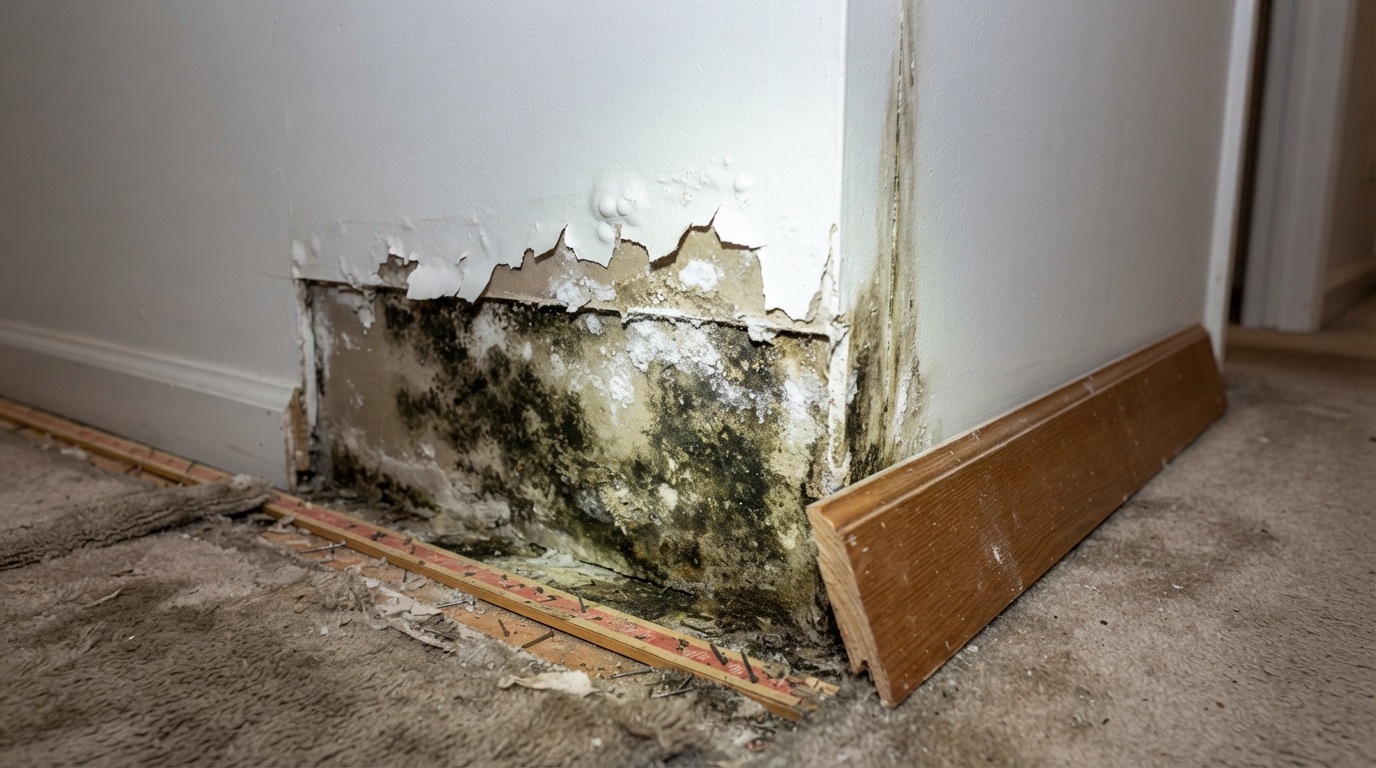
Mold is a coverage question before it is a cleanup question. In most Florida policies, mold is not a standalone covered peril, it is covered only when it results from a covered, sudden and accidental water loss, and even then it is usually capped by a mold sublimit. Mold from long-term humidity, maintenance, or a leak that persisted is typically excluded.
That makes the source of the mold the entire claim. If the mold traces back to a single, sudden, covered event, it is part of that water loss. If the carrier can tie it to gradual conditions, it reaches for the exclusion. Testing and documentation are what establish which story is true.
What decides a mold claim in Florida.
Mold must follow a covered, sudden loss
Most policies cover mold only when it results from a covered water loss that was sudden and accidental, a burst pipe, an overflow, a storm intrusion. Mold from ongoing humidity, condensation, or a long-term leak is generally excluded. Establishing the single triggering event is the key to coverage.
The mold sublimit caps the payout
Even when mold is covered, policies commonly apply a separate mold sublimit (often modest) that caps remediation. Carriers sometimes push a larger water loss under that small sublimit to reduce what they pay. We keep the water damage and the mold in their proper lanes.
Testing separates covered from excluded
Air and surface sampling, moisture mapping, and thermal imaging establish the extent, the moisture source, and whether the mold flowed from a sudden covered event. That evidence is what determines coverage and scope.
The Florida rules that decide a mold claim
Mold is rarely its own claim. It is the tail of a water loss, and the coverage question is whether the loss underneath it was covered. These sections were read from the Florida Legislature the day this page was last updated.
The covered cause underneath the mold is the whole argument
Most Florida property policies respond to mold only where it results from a covered peril, and most carry a separate mold sublimit measured in thousands rather than in the cost of the remediation. Those limits live in the policy rather than in the statutes, which is why the policy has to be read before anyone estimates the remediation.
The tear-out to reach it belongs in the loss
Section 626.9744(1) puts the physical damage incurred in making a covered repair into the loss, up to policy limits, and 626.9744(2) reaches adjoining areas where replaced items do not match in quality, color, or size. On a mold remediation that is the demolition, the containment, and the finishes that cannot be put back the way they were.
One year to give notice, eighteen months to supplement, for any peril
Section 627.70132(2) bars a claim or reopened claim unless notice reached the insurer within one year of the date of loss, and bars a supplemental claim after 18 months. It reaches loss or damage caused by any peril, not only weather.
The carrier is on a clock, and most policyholders never see it
Section 627.70131 puts hard deadlines on a residential property insurer: 7 calendar days to acknowledge a claim communication, 7 days after proof-of-loss statements to begin the investigation, 30 days to physically inspect, 7 days to send you a copy of any detailed estimate its adjuster generated, and under subsection (7)(a), 60 days from notice of the claim to pay or deny it with a written explanation. Section 627.4025(1) makes residential coverage include commercial lines residential policies, which covers condominium association, cooperative, and apartment building policies and policies on homeowners association common elements. A pure commercial policy on an office or retail building sits outside this section.
Statute text read from the Florida Legislature on 2026-08-24. General information only, not legal advice or a coverage determination. Coverage depends on your specific policy, the facts of your loss, and current Florida law.
What the carrier will try on a mold claim.
- —Attributing the mold to humidity, condensation, or long-term maintenance to trigger the exclusion.
- —Capping a larger water loss under a small mold sublimit.
- —Denying the mold without moisture or source testing.
- —Scoping visible surface mold and ignoring what is inside the wall or HVAC.
We Build Your Claim The Way Ford Built The Assembly Line.
Henry Ford didn’t try to be the expert at everything. He surrounded himself with specialists, each mastering one part of the work, and assembled the result into something no individual could build alone. We document claims the same way. For a serious loss, one adjuster’s opinion is not enough, so we bring in the right specialists, pull a full report from each, and assemble them into a claim the carrier cannot dismiss.
Building Consultants
Read the structure and the code the way an insurer’s engineer does, so nothing covered gets left out of scope.
General Contractors
Real-world repair pricing and sequencing that holds up when the carrier questions the cost to rebuild.
Structural Engineers
Independent reports on causation and structural damage that carry weight the carrier can’t wave off.
Professional Estimators
Line-item Xactimate estimates built to the same software and standards the carrier’s own adjuster uses.
Contents Specialists
Full inventory and valuation of damaged personal property and business contents, item by item.
Water & Mold Testing
Moisture mapping, thermal imaging, and lab testing that prove the source, the spread, and the cause of loss.
We don’t send an adjuster. We send a team.
These specialists are independent third-party professionals brought in for documentation and evidence purposes. CCG does not perform repair work and holds no financial interest in any repair or remediation contract.
Mold claims: what Florida property owners ask.
Is mold covered by homeowners insurance in Florida?
Usually only when it results from a covered, sudden and accidental water loss, such as a burst pipe or storm intrusion, and even then it is typically capped by a mold sublimit. Mold from long-term humidity, condensation, or a leak that persisted is generally excluded.
The carrier denied my mold as a "maintenance issue." Can that be challenged?
Yes, if the mold actually traces to a sudden, covered event. Denials often rest on a causation argument that testing can disprove. We establish the moisture source and timeline and pursue the covered claim.
What is a mold sublimit?
It is a separate, usually smaller cap the policy applies specifically to mold remediation, even when the mold is covered. Carriers sometimes try to squeeze a much larger water loss under that small cap. Keeping the water damage and the mold properly separated protects the full claim.
How do you prove the mold came from a covered loss?
Air and surface testing, moisture mapping, and thermal imaging establish the extent of the mold and its moisture source, and connect it to a sudden covered event rather than gradual conditions. That documentation drives both coverage and scope.
General information only, not legal advice or a coverage determination. Coverage depends on your specific policy, the facts of your loss, and current Florida law.
Denied, underpaid, or already closed? Florida law may still give you time to reopen a mold claim.
Have a mold loss? Start with a free review.
James reviews every submission personally and responds within 24 hours. No obligation, and no fee unless we recover for you.
← All claim typesReport Your Claim
We respond within 24 hours.